Our
Township History
|
The
township form of government is the oldest form of government
in the United States. Our Pilgrim Fathers brought the
Township form of government to America in 1620, and it
spread west as far as the Rocky Mountains. Today, almost
half of our 50 states have the township form of local
government.
|
| |
As
the Ohio Territory became populated, it was only natural
for the Township form to become the basic unit of government.
In 1804, the elected officials of a Township consisted
of three Trustees, a Clerk, Overseers of the poor,
Supervisors of highways, and a Justice of the Peace.
That basic structure exists today.
|
| |
The
present Township of Swanton bore the name of Wing Township
from 1836 until 1851. The name was that of the first
white settler in the area, Chandler L. Wing, who built
a log house on the West bank of Swan Creek, on the East
half of the SE quarter of Sec.8 . The first election
under the new name of "Swanton Township" was
held on April 7th of 1851.
|
| |
| |
First
frame house -
the dwelling and store of Luther Dodge, on the East
bank of Swan Creek and on the NE quarter Sec 5, near
the junction of the NE and NW branches of that stream.
Built in 1837
|
|
First
frame barn -
put up for a Mr. Pray of Waterville in 1840 by Lewis
Gale. It was on the SE corner of the NW quarter of
the SE quarter of Sec 29.
|
|
|
| |
First
road opened -
that which is now known as the State Road, running
from Maumee to the town of Swanton and on to the State
line. It was located in Dec. 1835, with a Mr. P.B.
Scott being one of those appointed for that purpose.
|
|
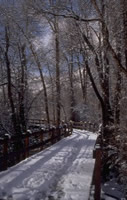
First
bridge -
was across Swan Creek on the State Road, and was built
during the Winter of 1836-37. It was located 25 rods
E of the W line of Sec 8, and built by Samuel Barrett.
|
 |
|
| |
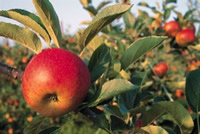
First
attempt at fruit growing -
a small orchard was set out by P.B. Scott in the Spring
of 1835.
|
|
First
blacksmith shop -
was that of James Williams. A third shop was built
on the W.D. Herrick place near Scott's Corners (Send
of the E half of NE quarter of Sec 7)
|

|
|
| |
First
wagon shop -
that of Chester Scott, and located on the P.B. Scott
farm (Scott's Corners).
|
|
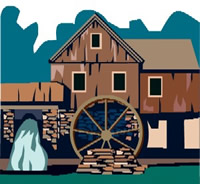
First
sawmill -
built by William Taylor around 1858 on the NE corner
of the SE quarter of the SE quarter of Sec 6.
|
|
|
First
and only Town plat -
laid out in 1836 by James Jackson and James H. Forsyth
of Maumee. The plat was located at the SW corner
of the NW quarter of Sec 8, and embraced what was
commonly known as Scott's Corners. Nothing beyond
the platting ever came of the enterprise.
|
| |
First
public house or tavern -
kept by Huntington Larabee, as early as 1834. At the
time of the first settlement of Swanton Township, the
travel through it was comparatively heavy - consisting
mainly of "movers", as the emigrants from the
East to the West were called. The housing of these and
the care of their teams constituted the chief business
of the large number of small taverns found along the
line of such travel.
|
| |
Originally,
Swanton was the most central point in Lucas County, and
as such was the usual place for holding political conventions
and other county assemblages. That all changed after
Fulton County was formed from the western section of
Lucas.
|
| |
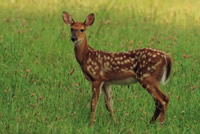
For
several years after settlement, game was abundant in Swanton
Township. Deer were numerous, with some wolves and cougars
and an occasional bear. Elk horns were found in large number,
showing the former presence of that animal. A few moose horns
were also found here and there.
|
|
| |
In
the summer of 1837, and for several years thereafter,
Chief Ottokee of the Ottawa Indians and a part of his
tribe lived on the North half of the SE quarter of Sec
5. He owned the place and occupied a house there, which
was built by a Mr. Halford in 1835. The Indians hunted
and sometimes sold a side of venison for 25 cents, often
trading for vegetables. Most of the trading was done
by the squaws. When the balance of his tribe were removed
West, Chief Ottokee refused to go. He remained and later
died here in Swanton Township.
|
| |
|
|

 Website
Designed and Maintained
Website
Designed and Maintained
by ©Aastek Computers |
|